Who are you here for?
Everyone gets a different view. Pick yours.
Four questions. One diagnosis.
One paper. Four honest answers.
The school, the teacher, the student and the parent each ask something different. The same marked test paper answers all four.
“Which class needs help — before the board results say so?”
Every class opened concept by concept. You see it in October, not after the boards.
“Forty students. What do I re-teach tomorrow?”
A heatmap that names the chapter — and the six students who need it most.
“I studied this. Why didn’t it stick?”
Because facts weren’t the problem. We name the concept — and the thinking level behind the lost marks.
“Is my child actually improving?”
Before → after, per concept — in marks, not adjectives.
From marks to mastery
Three steps. And your teachers keep doing their thing.
Upload the papers your teachers already mark
Same handwritten answer sheets, same marking scheme. Nothing new for your teachers to learn.
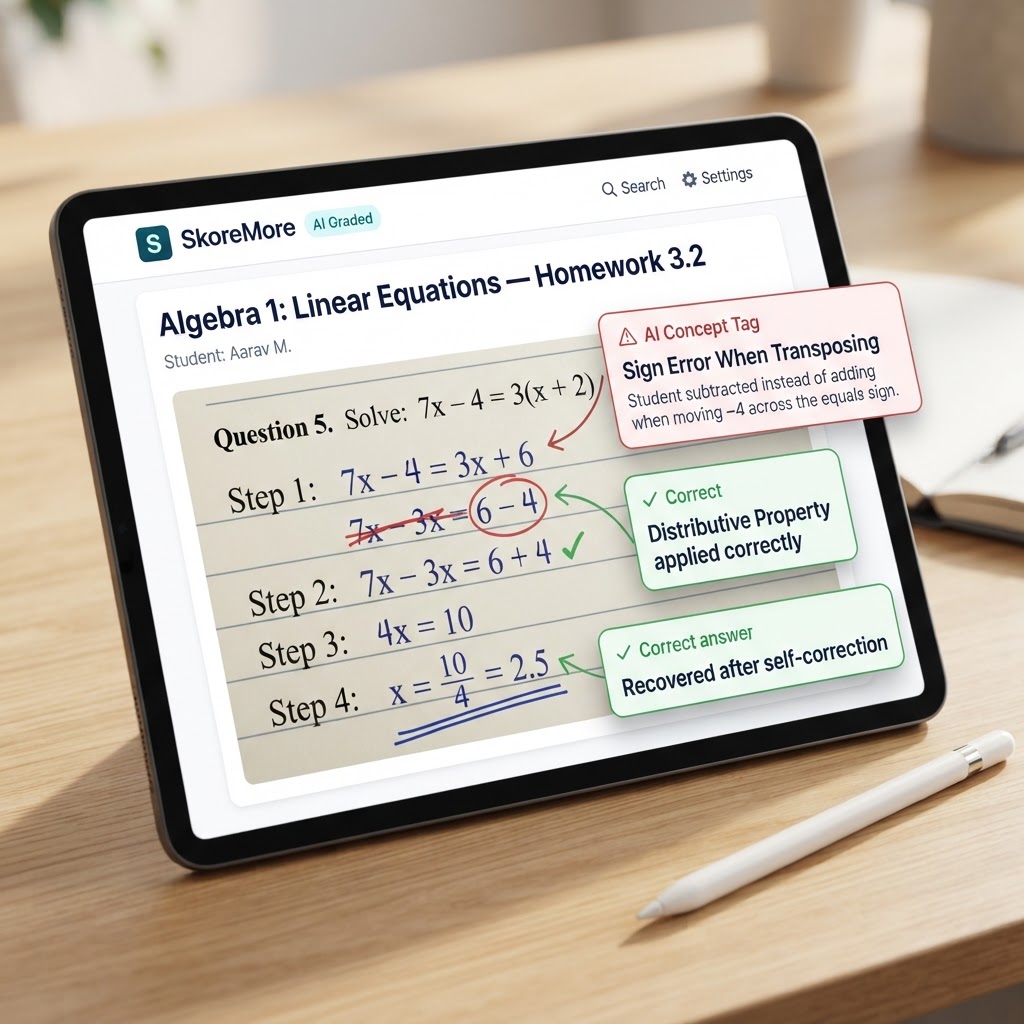
We do a first pass — the teacher signs off
Three AI models cross-check each answer. If they agree, great. If they don't, a teacher decides. Nothing gets locked in without a human.
Everyone gets a clear next step
The student sees what to practice. The parent gets a plain-English note. The teacher gets a heatmap of what to re-teach.
We'd rather be honest than clever.
If the AI isn't sure, it says so — and a teacher decides. No black box, no guessing, no marks locked in without a human.
95–97%
of AI scores are within one mark of the teacher
Measured across 900+ handwritten answers in our pilot cohort
3 models
cross-check every answer
If they don't agree, a teacher decides — not the AI
IIM-C
Born from research, not marketing
Started as a capstone on how to grade fairly with AI
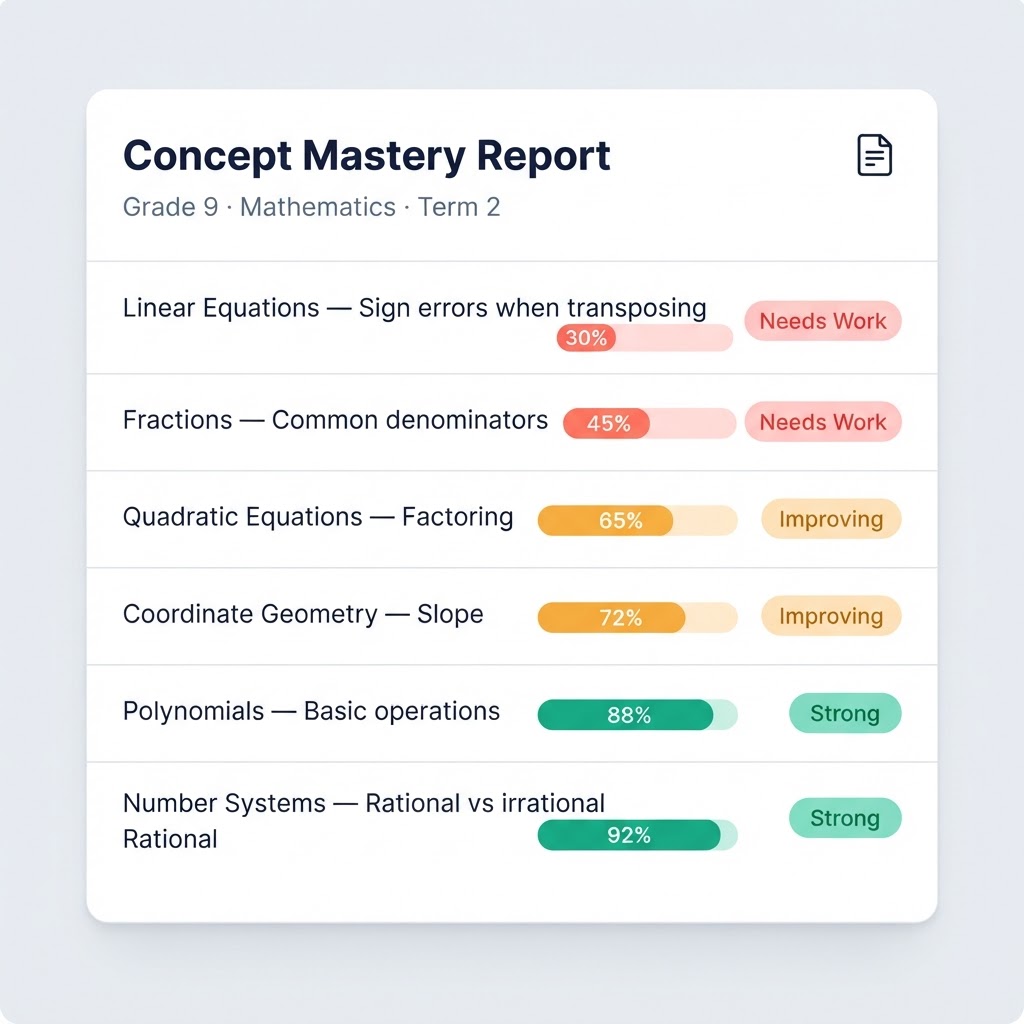
Behind every wrong answer, there's a topic worth naming.
Losing marks isn't random. It's usually one or two topics quietly letting a student down. We find those, name them, and put them in front of the people who can help.
Each topic ends up in one of three buckets — Needs Work, Improving, or Strong. Straight from the papers your school already marks.